THE BUSINESS AI PLAYBOOK
AI tool integration contracts: make business actions dependable
Define dependable AI tool integrations with precise inputs, validation, permissions, repeat protection and useful results your operations team can verify.
 Discuss with Oliver and his team
An AI tool integration contract defines what a tool does, what inputs it accepts, which permissions it requires and how success or failure is reported. It should also specify how repeated requests are handled and how the result can be verified. The business value comes from reliable actions with clear boundaries, not from giving an agent a large menu of loosely described software functions.
What to take away
- Make each tool’s business purpose and side effects explicit.
- Validate inputs and permissions before executing an action.
- Return stable identifiers and useful failure states for recovery.
Name the business operation precisely
“Update customer” is ambiguous. “Create an internal follow-up task for an existing customer” states a narrower operation. Its required inputs might be customer ID, task type, due date and assigned owner. The tool description should explain when to use it and what it does not do, including whether it sends a notification or changes a customer-visible record.
Ask the business owner to review the contract before implementation. They should recognize the operation and its consequences. A technically convenient endpoint may expose more authority than the intended workflow needs. Wrap it in a narrower operation if that produces a clearer and safer working boundary.
Validate the request before changing anything
Check the identity, required fields, allowed values and current record state. Do not let the model invent a customer ID or supply a free-form status that the business system does not recognize. Use explicit validation errors that explain what information is missing without exposing unrelated data.
In a hypothetical distributor, a quote-draft tool requires an active customer, valid product IDs and quantities. It calculates line totals through established pricing logic and returns a draft identifier. It cannot convert the draft into an order. That second action has its own contract and approval rule, so drafting does not silently become a commercial commitment.
Make retries safe and results meaningful
Networks fail and agents may repeat a request. Assign a stable operation key so the system can recognize an already completed action rather than create a duplicate. Define what happens if the same key arrives with different inputs. The engineer should verify the behavior against the actual downstream system rather than assuming every API provides repeat protection.
Return the created record ID, current status and a link or retrieval method for verification. Distinguish “accepted for processing” from “completed.” A queued email, pending export or submitted order can still fail later. The workflow needs the correct state to decide whether to wait, verify or escalate.
Version the contract and test its boundaries
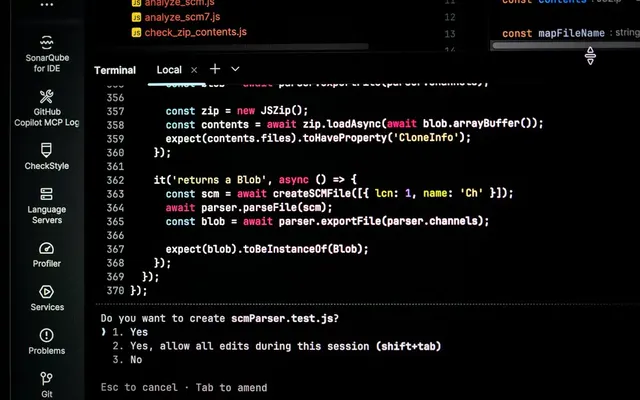
Changes to field meanings, permissions or side effects can break an agent even when the function name stays the same. Keep a contract version and a small set of representative tests. Include invalid identifiers, duplicate requests, stale records and downstream outages. Test with the actual agent as well as direct calls.
Copy-ready integration brief: “Document purpose, inputs, validation, identity checks, side effects, approval needs, repeat-request behavior, success evidence and failure states. Provide one valid example and three rejected examples. Explain how an operator can recover a partially completed request.” This gives managers a useful review artifact and engineers a concrete implementation target.
FROM READING TO ACTION
Your first steps
- Describe the exact business operation and excluded actions.
- Specify required inputs and validate record identity and state.
- Define permissions and approval requirements separately.
- Add repeat-request protection and verifiable output identifiers.
- Test failure, retry and contract-change behavior before release.
What to measure
| Measure | How to track it |
|---|---|
| Valid action completion | Measure requests that produce the expected verified business state without manual repair. |
| Duplicate side effects | Count repeated records, messages or other effects caused by retries of the same operation. |
| Recoverable failure rate | Track failures that provide enough state and evidence for a clear operator recovery path. |
Common questions
Is an API connection enough?
An API provides a way to communicate with software, but the agent still needs a clear contract for when and how to use it. Validation, authorization, repeat protection and result verification turn connectivity into a dependable workflow.
Should we expose every available tool?
Expose the tools needed for the task and keep their purposes distinct. A smaller clear set is easier to test and operate. Add tools when they solve a demonstrated gap, then recheck permission boundaries and end-to-end behavior.
Sources & further reading
These sources provide background. The workflow designs are Palnau Systems implementation guidance; examples are illustrative, not reported client results. Product capabilities and requirements can change.
Prepared with AI assistance for business owners and managers. For a recommendation based on your actual systems and requirements, work directly with Oliver and his team.