AI-native organizations · 20 GUIDES
Prepare your business for the AI-native era.
Understand agent teams, autonomy, frontier AI and the controls that make them useful at work.
Find your starting point with Oliver and his team
How to prepare your company for the AI-native era
Prepare your company for AI with a practical operating plan: map work, organize knowledge, set ownership, test agent workflows and measure business value.

The autonomous organization: an operating model for business owners
Design an autonomous organization around accountable workflows, clear authority, exception handling and business outcomes that your management team can verify.

How to design AI agent teams around real business work
Build useful AI agent teams with clear roles, handoff contracts, shared evidence and one accountable owner. Learn where specialization earns its complexity.

How managers can delegate work to AI agents effectively
Turn vague AI requests into usable assignments with clear outcomes, evidence, action boundaries, review criteria and escalation rules for business managers.

Human approval policies for AI agents: what to approve and when
Create AI approval policies that protect important decisions without overwhelming managers. Define action limits, evidence packets and accountable reviewers.

An AI agent evaluation scorecard business owners can use
Evaluate AI agents with a business scorecard covering outcome quality, source accuracy, action safety, review effort and the total cost of completed work.

AI agent memory and company knowledge: what should persist?
Design AI memory that preserves useful context without confusing old conversations with current policy, customer records or permission to take action.

AI agent observability: know what happened and why it matters
Give managers an AI operations view with case histories, verified outcomes, approvals, errors and costs, supported by useful audit trails and clear ownership.

AI agent permissions: give systems only the access they need
Set practical AI agent permissions by role, record and action. Reduce unnecessary access while keeping approvals, service accounts and business ownership clear.
AI tool integration contracts: make business actions dependable
Define dependable AI tool integrations with precise inputs, validation, permissions, repeat protection and useful results your operations team can verify.
Computer-use AI agents for legacy business software
Explore computer-use AI for legacy software with a practical plan for isolated sessions, limited actions, human checkpoints and verified business records.

Multimodal AI document workflows: from messy files to usable records
Build AI document workflows that combine text, tables and images while preserving source evidence, validating fields and routing uncertain records for review.

Voice AI agents: design the human handoff before the conversation
Build voice AI with clear escalation triggers, confirmed caller details and useful handoffs so customers can reach a person without repeating the whole story.

AI research agents for business: turn sources into decisions
Use AI research agents to build decision-ready briefs with source verification, dated evidence, competing explanations and clear limits on what is known.

How to choose an AI model using your business benchmarks
Choose AI models with tests from your own workflows. Compare quality, review effort, response time and total cost instead of relying on public leaderboards.

Prompt injection defenses for business owners using AI agents
Understand prompt injection in business workflows and reduce exposure with trusted instructions, narrow tools, validated fields and approval boundaries.

AI data readiness: organize the records your agents will rely on
Prepare business data for AI by identifying authoritative records, resolving ownership, checking permissions and testing retrieval on actual employee questions.
How to use frontier AI without making your business hard to move
Keep frontier AI systems adaptable with owned data, documented workflows, portable tool contracts, evaluation sets and a realistic plan for changing providers.
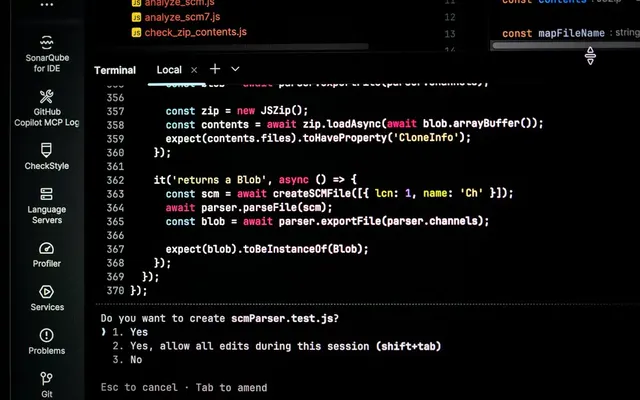
AI workflow exception recovery: keep failures from becoming lost work
Design AI workflows that recover from timeouts, missing data and partial completion with clear case states, safe retries and an accountable exception queue.

The AI operations manager: who owns agents after launch?
Define AI operations ownership with a practical role covering workflow quality, exceptions, costs, permissions, employee adoption and controlled improvements.
TURN AN IDEA INTO A WORKING SYSTEM
Your next step. A conversation.
Bring one bottleneck, your website and the tools your team uses. Oliver and his team will help you explore a practical next step.

Work directly with Oliver and his team.
We map the opportunity, build the system, connect your tools and help your people put it to work.
- A free, 30-minute introductory call
- Discuss your workflow, tools and business goals
- Agree on a useful next step, with no obligation
Use the calendar to choose a time. Your appointment is booked only after Calendly confirms it. Privacy
Calendar not loading? Open Calendly directly